If you're weighing a metal building against traditional wood-frame or masonry construction, the honest answer is that it depends on what you're building and how you'll use it. But for a wide range of commercial, agricultural, and residential projects in Texas, engineered steel has clear, practical advantages. Here's a straight comparison across the factors that actually move your decision.
Cost
For large clear-span spaces — shops, warehouses, arenas, equipment storage — steel typically delivers more enclosed square footage per dollar than wood frame or masonry, in part because it spans long distances without interior support columns. Costs vary widely with size, finish level, insulation, and site conditions, so the right way to compare is on your specific scope. Our metal building cost guide walks through the factors, and a firm bid gives you the real number for your project.
Build speed
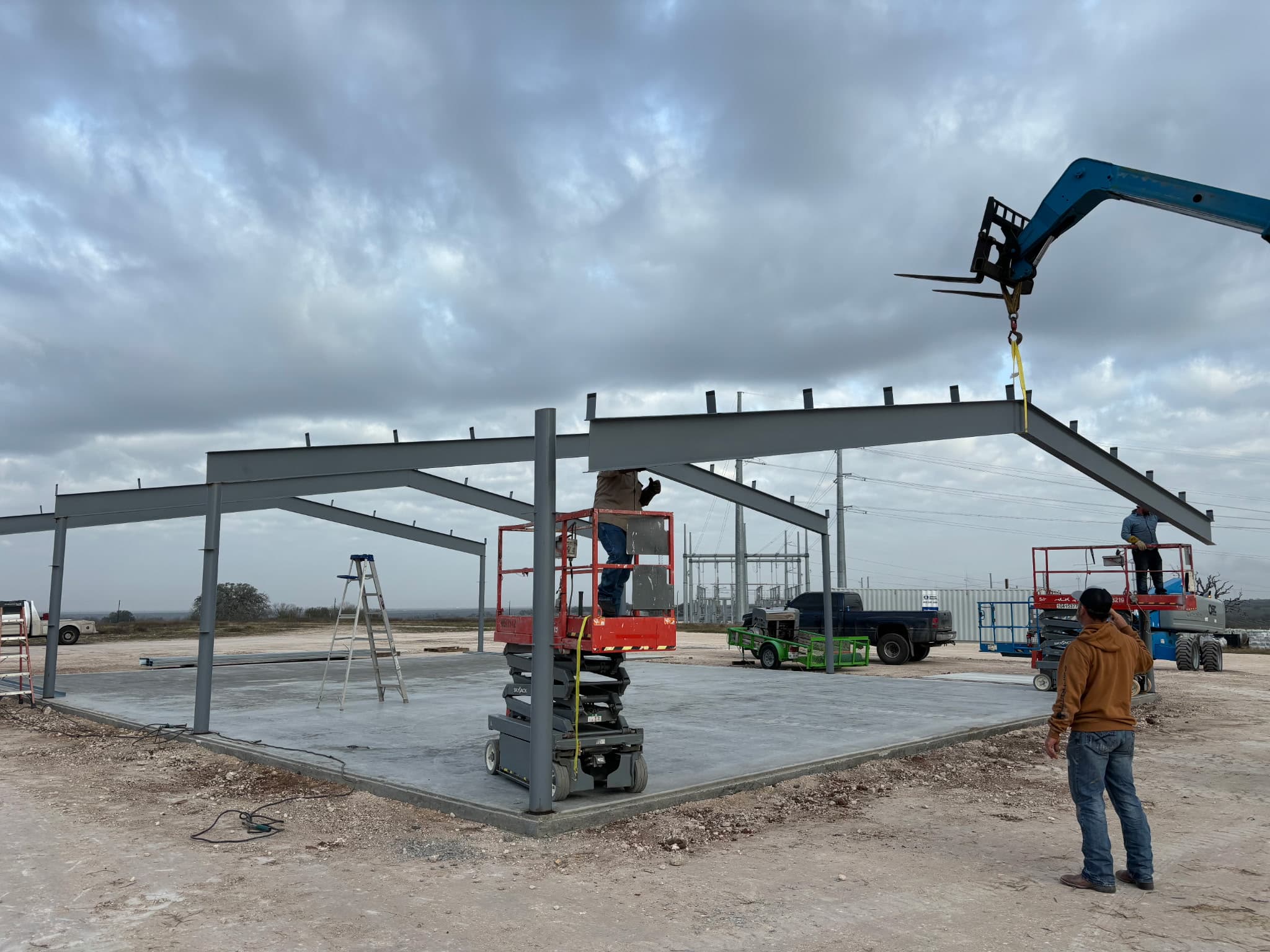
Steel components are engineered and fabricated to spec, then erected on site. That generally makes for a faster, more predictable build than stick-framing a structure piece by piece or laying masonry. Fewer trades and a more controlled sequence also mean fewer weather-dependent steps — which matters in a state where summer heat and spring storms can stall outdoor work.
Durability and Texas weather
Engineered steel buildings are designed to defined wind ratings and load requirements — which is exactly what you want in Texas, where wind, hail, and heat are constants and coastal areas add salt exposure on top. Steel doesn't rot, it isn't a food source for termites, and it won't warp the way wood can in heat and humidity cycles. Properly specified coatings and fasteners handle the climate differences between inland and coastal sites — something we cover in detail on our warranty page.
Maintenance and lifespan
Metal buildings are generally low-maintenance: keep gutters clear, re-tighten fasteners on schedule, touch up finish where it's scratched, and keep ventilation paths open. That's a lighter ongoing burden than the painting, sealing, and rot/pest management that wood structures often require. SSG backs its buildings with a 40-year material warranty on steel, panels, fasteners, and finish systems — a reflection of how long a properly specified steel building is built to last.
Flexibility and expansion
Clear-span steel gives you wide-open interior space you can configure for almost any use, and it's comparatively straightforward to extend a metal building later by adding bays. That makes steel a strong fit for businesses and operations that expect to grow.
Where traditional construction still wins
Traditional methods have their place — certain architectural styles, specific finishes, or local aesthetic requirements can favor wood frame or masonry. And a barndominium or finished metal home often combines both worlds: a steel shell with a fully built-out, conventional interior. The point isn't that steel always wins; it's that for most functional Texas buildings, engineered steel is the practical, durable, cost-effective choice.
The bottom line
For shops, warehouses, barns, arenas, and many homes across central and south Texas, a custom-engineered metal building tends to win on cost-per-square-foot, build speed, durability, and long-term maintenance. The best way to compare apples to apples is a firm bid on your actual project — scope, site, and finish level included.
Curious what your project would involve? Explore our commercial, residential, and agricultural building pages.